It hurts because it mattered, but rejection is not a referendum on your worth.
UPRIGHT
Heartbreak, grief and the clarity that arrives when a difficult truth can no longer be avoided.
REVERSED
Healing, release and honest emotional repair, or a warning that old pain is still running the show.
What this card is really trying to tell you
The Three of Swords is not here to be cute about it. Something hurts, or something needs naming before it hurts more. This card often appears when disappointment, separation, betrayal or grief has landed in the chest and made itself at home. It can point to a breakup, yes, but it can also describe a friendship ending, a family wound, a job rejection, an illness, or the slow realisation that a situation is not what you hoped it was.
Its message is not that you are doomed to suffer. It is that pretending you are fine will not make the truth less true. The Three of Swords asks for clean honesty: what happened, how did it affect you, and what do you need now? That is different from replaying the scene until your brain becomes a grim little cinema.
There is dignity in admitting that something mattered. You do not need to minimise a loss because someone else has had it worse. Equally, you do not need to make this pain your whole identity. Feel it, name it, get support where needed, and keep hold of the fact that another person’s choice, cruelty or inability to show up does not define your value.
Traditional symbolism and what it means
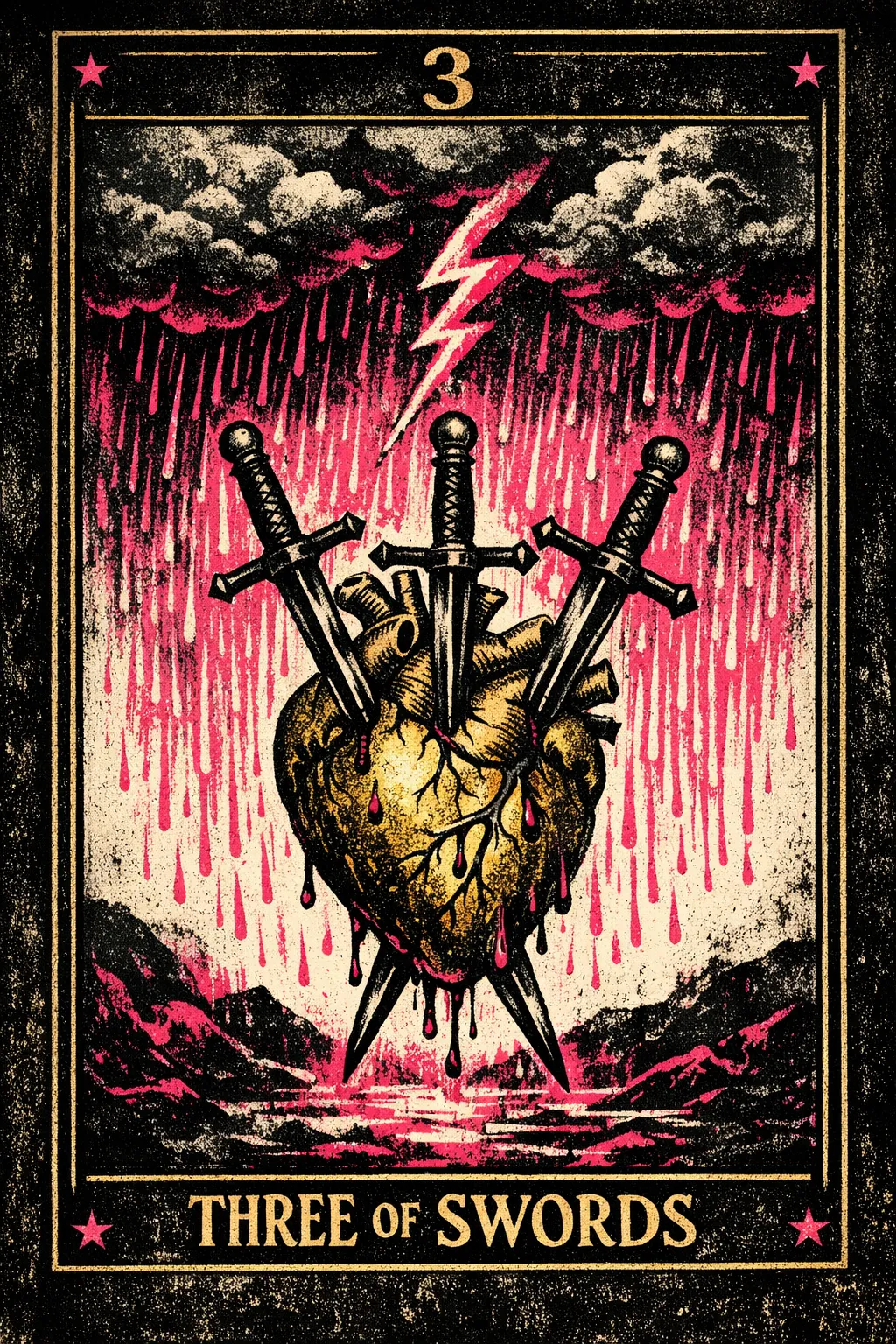
The classic Three of Swords shows a red heart pierced by three swords, suspended beneath rain and storm clouds. There is no human figure in the image. That absence matters. Pain can feel strangely isolating, even when people love you and would bring tea, chips and questionable opinions if they knew the full story.
- The heart represents emotional life, attachment, tenderness and the parts of us that take risks by caring.
- The three swords show thoughts, words or facts that cut through denial. Swords belong to the mind and communication, so the wound may involve harsh words, difficult information or conflicting perspectives.
- The rain and storm clouds reflect grief, tears and a temporary emotional weather system. Storms are real, but they are not permanent residents.
The image is stark because emotional pain rarely needs decorative language. Still, the heart remains visible. It has not vanished. That is the quiet point of the card: a wounded heart is still a heart, capable of recovery, connection and better boundaries.
Upright meaning
Upright, the Three of Swords signals a painful truth, heartbreak, grief or a clear emotional disappointment. You may be confronting what someone said, what they did, or what they consistently failed to do. It can also show the ache of accepting that your hopes and reality are not currently matching.
This is not automatically a card of permanent endings. Sometimes the truth hurts precisely because it gives you a chance to deal with the actual problem. A hard conversation may expose a crack that can be repaired. A rejection may redirect you from a bad fit. A period of grief may make space for a more honest life. None of that makes the pain a gift wrapped in glitter. It simply means pain can contain useful information.
Ask yourself where you are being asked to stop bargaining with reality. Then choose one kind, practical response. That might be muting an ex, booking a GP appointment, telling a friend you are struggling, asking for clarity, or allowing yourself a proper cry instead of announcing that you are “just tired”.
Reversed meaning
Reversed, the Three of Swords can point to healing already underway. You may be putting the pieces together after a rupture, letting yourself feel what you previously shoved into a mental drawer, or becoming more selective about who gets access to your soft bits. Recovery is often uneven. One good day does not mean you are finished, and one rubbish day does not mean you are back at square one.
It can also flag pain that has been suppressed or prolonged. Perhaps you are saying you are over it while checking their social media at 1am. Perhaps resentment is leaking out sideways because the direct conversation feels too risky. The reversal asks whether avoiding the feeling is actually protecting you, or merely extending the tenancy.
Where repair is possible, speak plainly and listen for behaviour, not just pretty apologies. Where repair is not possible, let closure be something you create through your own choices. You do not need a final speech from the person who hurt you to begin moving on.
Love and relationships
In love readings, the Three of Swords often reflects heartbreak, conflict, emotional distance or a truth that needs to be faced. It may show a breakup, but do not use one card to pronounce a relationship dead. Tarot is a reflection tool, not a court order from the universe.
If you are partnered, look at what is actually causing the ache. Is there dishonesty, recurring criticism, unmet needs, a betrayal of trust, or simply two people avoiding a difficult topic? Be specific. “You never care” is a grenade. “When you cancelled again without telling me, I felt unimportant” is a conversation.
If you are single, this card may bring old heartbreak into view. It does not mean you should avoid dating forever or fling yourself at the first person with decent banter. It asks you to notice whether you are choosing from fear, loneliness or self-respect. Let past pain inform your standards without becoming the bouncer at every possible connection.
Career and work
At work, the Three of Swords can show disappointment, blunt feedback, office conflict or the sting of being passed over. You may learn that a role is ending, a project is not viable, or a colleague is not as supportive as you thought. It is frustrating, and you are allowed to be disappointed without sending a dramatic email that becomes departmental folklore.
Separate the facts from the story you are telling yourself. Feedback might reveal a useful skill gap, a toxic manager, poor communication or an organisation that simply does not value what you offer. Those are different problems with different solutions. Document what happened, ask clear questions, update your CV if needed, and seek advice from someone outside the workplace bubble.
This card can be a prompt to stop investing your self-worth entirely in professional approval. Your work matters. You matter more.
Money
For money, the Three of Swords may reflect financial stress, a disappointing expense, a rejected application or an uncomfortable conversation about shared costs. Do not catastrophise, but do look directly at the numbers. Avoidance is expensive.
Make the situation smaller and more manageable: check balances, list urgent bills, contact providers before you miss a payment, and get free debt advice if you need it. If money is tangled up with a partner, family member or friend, agree on facts and next steps in writing. Romance is lovely; an undocumented loan is less so.
Personal growth and spiritual meaning
Spiritually, the Three of Swords invites emotional honesty rather than spiritual bypassing. You are not required to find the lesson immediately, forgive on demand, or turn grief into a personality upgrade. Sometimes the most grounded practice is to say, “This hurt me,” and take yourself seriously.
The card also teaches discernment. Not every painful thought is true, but some truths are painful. Learn to tell the difference. Notice the evidence, listen to your body, and be wary of narratives that make you wholly powerless or wholly to blame. You can own your part without carrying everyone else’s baggage like an unpaid airport porter.
Boss Witch Reality Check
Being hurt does not give you a free pass to hurt yourself further. Do not chase someone for an explanation they are unwilling or unable to give. Do not turn one rejection into proof that nobody will love you, hire you or choose you. That is pain talking, and pain is loud, not always accurate.
Let the truth be clean. Someone may have behaved badly. A situation may genuinely be over. You may need to change course. None of those facts require you to abandon yourself.
Boss Witch Journal Prompt
What is the painful truth I already know, and what would caring for myself look like if I stopped arguing with it?
Boss Witch Challenge
Set a 20-minute timer today and write two lists: “what happened” and “what I am making it mean about me”. Circle every item in the second list that is an assumption rather than a fact. Then do one practical thing from the first list, such as booking an appointment, sending a clear message, updating a budget or asking a trusted person for support.
Boss Witch Reminder
You can miss someone and still not contact them. You can grieve a plan and still make a new one. You can be tender-hearted and have standards. That is not contradiction. That is grown-woman magic.
Frequently asked questions
Is the Three of Swords always a breakup card?
No. It can describe any painful truth, grief, conflict, rejection or emotional disappointment. Context and the surrounding cards matter.
Does the Three of Swords mean cheating?
Not automatically. It can reflect betrayal, but it may also point to hurtful communication, separation or an old wound. Do not make accusations based on a tarot pull.
What does the reversed Three of Swords mean?
It often suggests healing and emotional release, though it can also show pain being avoided, suppressed or allowed to drag on.
What should I do when I pull the Three of Swords?
Name the facts, make room for your feelings and take one sensible next step. Seek support if the pain feels too heavy to carry alone.
Related cards
The Five of Cups is useful when grief and regret are taking centre stage, while The Tower speaks to the shock of a truth that changes the structure of things. For the calmer mental clarity that can follow the storm, look to the Ace of Swords. Together, these cards remind you that clarity may sting, but it can also help you choose what happens next.
Leave a Reply