Category: Tarot Guides

Practical, empowering guides to tarot spreads, interpretation and reading with confidence.

  • How to Read Multiple Tarot Cards as One Story

    How to Read Multiple Tarot Cards as One Story

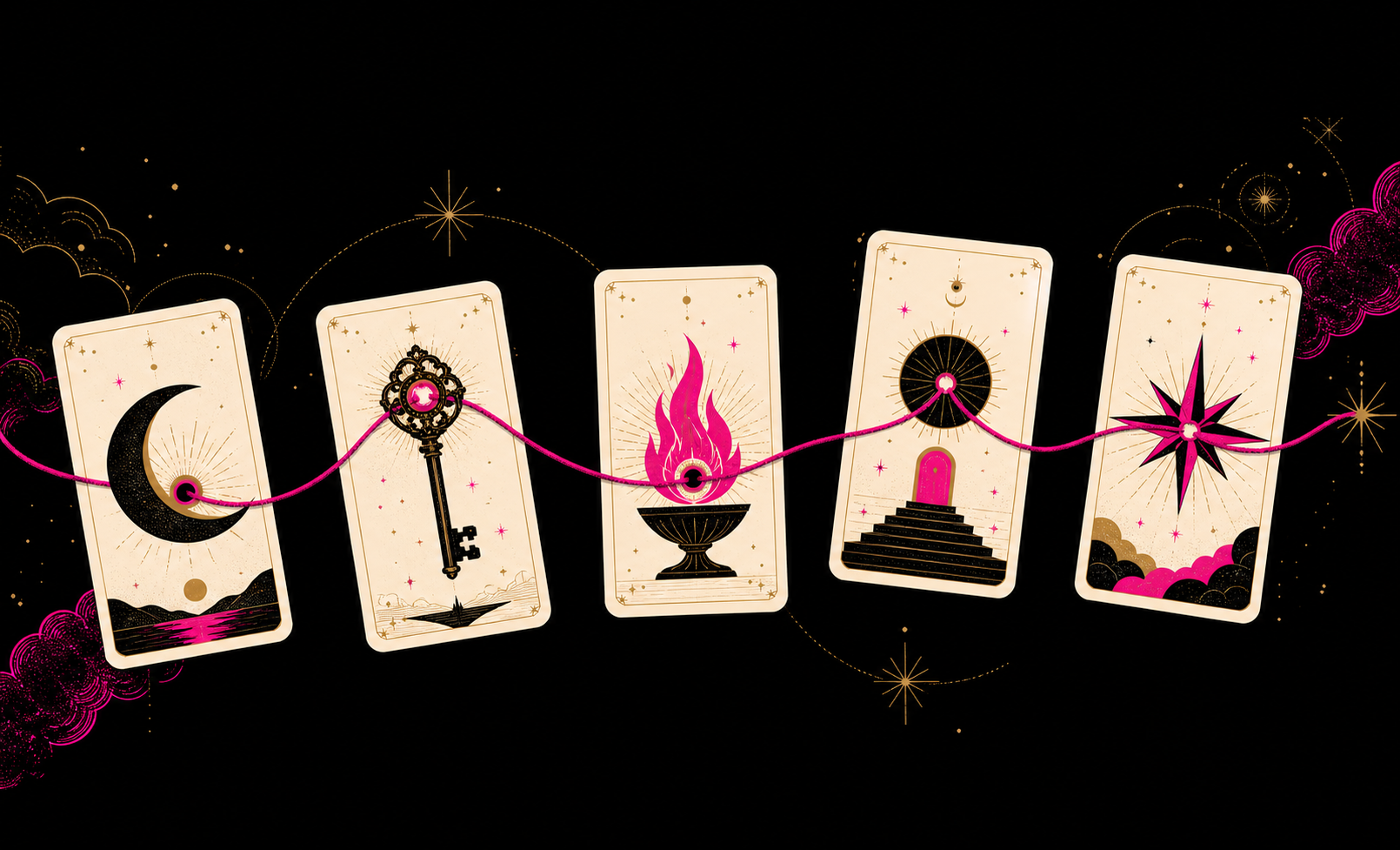
    Knowing individual card meanings is only the beginning. A reading comes alive when you stop treating each card like a separate definition and start noticing the story they create together.

    Begin with your first impression

    Before reaching for a guidebook, look at the spread. Does it feel calm, tense, hopeful, heavy or fast-moving? Which card grabs your attention? Your immediate response is not the entire interpretation, but it is valuable information.

    Respect the positions

    A card answering “what helps me” behaves differently from the same card answering “what challenges me.” Read the card through the job you gave that position.

    Find the visual movement

    Notice where figures look, point or travel. Do two cards appear to face one another? Is a figure walking away from the rest? Does the scenery move from darkness into light? These details can reveal connection, avoidance, momentum or tension.

    Look for patterns

    A run of Cups emphasises emotions and relationships. Swords bring thoughts, communication and conflict. Wands speak of energy, ambition and action, while Pentacles ground the reading in work, money, the body and practical reality.

    Repeated numbers, court cards or elemental energies deserve attention. Several Major Arcana cards can indicate that the reading concerns a larger life lesson.

    Identify the turning point

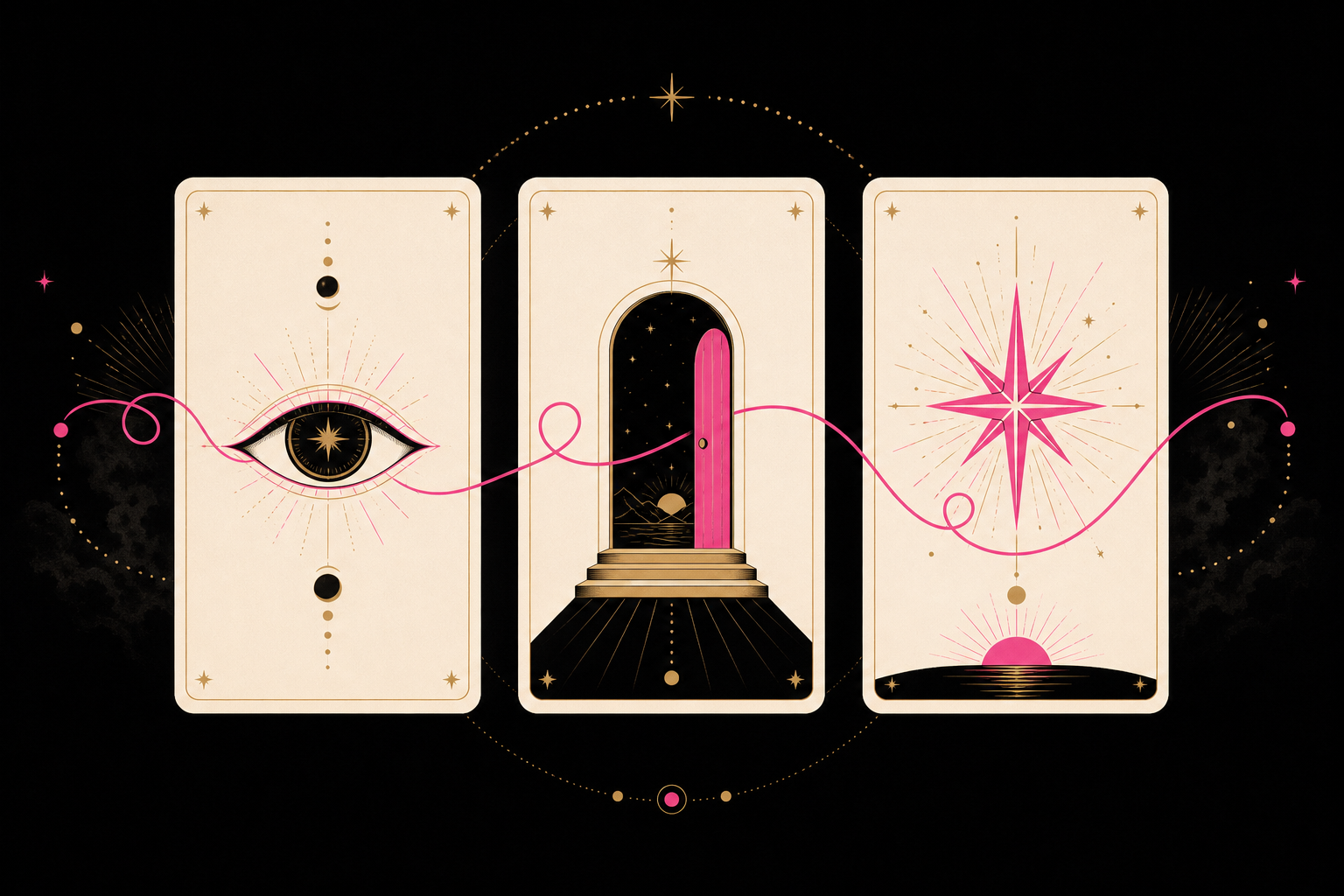
    In a three-card spread, the middle card often shows the hinge of the story. Ask how card one becomes card three. What choice, realisation or action does card two introduce?

    Use connecting words

    Try saying the reading aloud using “because,” “but,” “therefore” and “if.” For example: “I am holding tightly because I fear instability, but a new opportunity asks me to act; therefore I need a plan that creates safety without keeping me stuck.”

    This transforms three keywords into one coherent message.

    Do not force every symbol

    You do not need to explain every colour, number and object. Choose the details that genuinely support the question and the pattern you can see. A clear reading is more useful than an impressive-sounding one.

    End with an empowered takeaway

    Summarise the reading in two sentences: what is happening, and what can you do with that knowledge? Tarot should leave you with perspective and a next step, not make you feel trapped by a prediction.

    Practise with a three-card spread, then use the tarot meanings library to deepen your understanding without losing the story.
  • What Does It Mean When You Get Lots of Major Arcana Cards?

    What Does It Mean When You Get Lots of Major Arcana Cards?

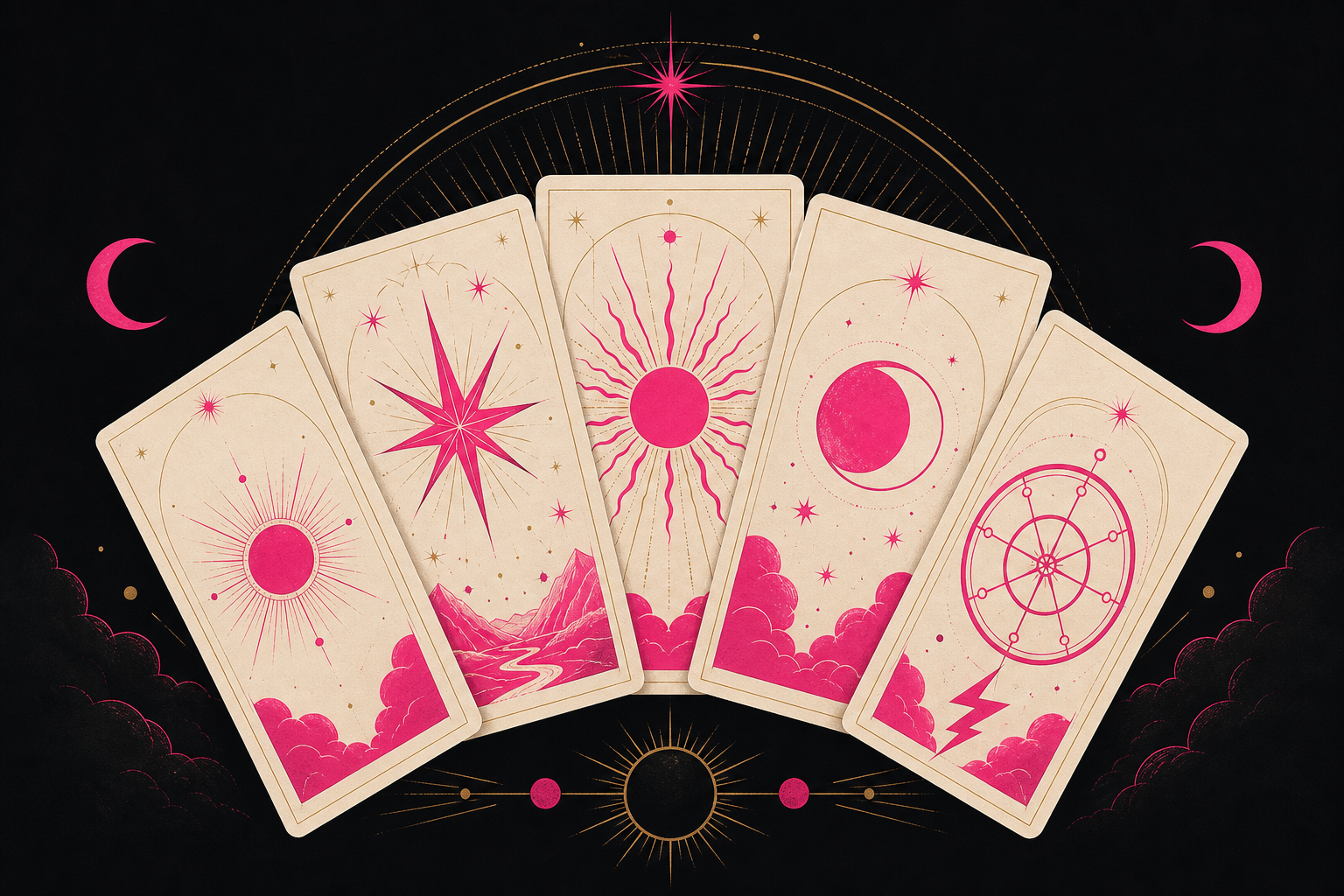
    You turn over your cards and the reading is full of Major Arcana. The Fool. Strength. Death. The Star. It immediately feels bigger than an ordinary daily check-in — and usually, it is.

    Major Arcana represent the bigger lessons

    The 22 Major Arcana cards describe major archetypes, transitions and chapters of human experience. They often appear when a situation is tied to identity, purpose, growth or a turning point rather than a passing inconvenience.

    That does not mean disaster or destiny has arrived. It means the reading may be asking you to look beyond the surface details.

    The balance matters

    One Major Arcana card among several Minor Arcana cards may act as the headline, with the surrounding cards showing how that theme plays out day to day. When most of the spread is Major Arcana, the period can feel less negotiable: something significant is asking for your attention.

    You still have agency. The cards describe the lesson and the energy, not a fixed script you are forced to perform.

    Look at the sequence

    Major Arcana are numbered from The Fool at zero through to The World at 21. Earlier cards can suggest initiation, experimentation and the formation of personal power. Later cards often deal with surrender, transformation, perspective, awakening and completion.

    If several appear, read them as stages of one journey. What begins the process? Where is the challenge? What kind of integration is being requested?

    Notice repeated themes

    The Emperor, Justice and Judgement may raise questions about authority, accountability and decisions. The High Priestess, The Moon and The Hermit might emphasise inner knowledge, uncertainty and withdrawal. Death, The Tower and The World can point to endings that clear space for a new chapter.

    What should you do next?

    Slow down. Journal the reading before pulling more cards. Ask which theme feels most alive in your real circumstances and identify one grounded action that honours the message.

    You can explore every card in the tarot meanings library. Compare the Major Arcana with the practical, everyday energy of the Minor Arcana to understand why the balance of your reading matters.

  • How to Ask Tarot Better Questions

    How to Ask Tarot Better Questions

    A powerful tarot reading begins before you draw a card. The question shapes the reading: vague questions tend to produce vague guidance, while questions built around your own choices create something you can actually use.

    Move from prediction to perspective

    “Will this definitely happen?” places all the power outside you. Try asking what is influencing the situation, what you need to understand, or how you can respond with confidence.

    Instead of “Will I get the job?” ask: “What can I do to present myself powerfully?” or “What should I understand about this opportunity?”

    Keep yourself at the centre

    Questions about somebody else’s hidden thoughts can pull you into guessing. Bring the focus back to the information that belongs to you.

    Instead of “Why are they ignoring me?” try: “What do I need to understand about this dynamic?” or “What boundary would protect my peace here?”

    Ask one question at a time

    If you ask about your ex, your career, your finances and the next six months in one breath, the cards have no clear framework. Separate the issues. One focused reading will usually give you more than a sprawling one.

    Use open questions

    Helpful beginnings include:

    • What do I need to understand about…?
    • What energy am I bringing to…?
    • What am I not seeing clearly?
    • What would support me now?
    • What is my most empowered next step?
    • What pattern am I ready to change?

    Avoid questions that remove your agency

    Tarot is at its best as a mirror, not a command. You remain responsible for your relationships, money, health, career and safety. Let the cards reveal patterns and possibilities, then combine that insight with evidence, conversation and practical action.

    Write the question down

    Putting the question into words exposes vagueness immediately. Write it at the top of the page, choose a suitable tarot spread layout, and record your first response before looking up every traditional meaning.

    If you want to practise, visit Tarot Readings. The love reading and career reading can offer a focused starting point.

  • Three-Card Tarot Spreads: More Than Past, Present and Future

    Three-Card Tarot Spreads: More Than Past, Present and Future

    Three cards can tell a surprisingly complete story. The layout is quick enough for a regular practice, spacious enough for intuition and structured enough to stop a reading from drifting.

    Past, present and future is only one way to use it. Give the positions a purpose before you shuffle, and the same three-card shape can answer dozens of different kinds of questions.

    Past, present and future

    Card one shows an earlier influence, card two describes the energy operating now and card three reveals where the current pattern may lead. The future card is not an unchangeable verdict. Treat it as a direction based on the energy and choices already in motion.

    Situation, obstacle and advice

    This is one of the clearest practical layouts. The first card names what is really happening. The second highlights friction, a blind spot or the belief keeping you stuck. The third suggests the most useful response.

    You, them and the connection

    For a relationship question, card one can explore your position, card two the other person’s energy and card three the dynamic being created between you. Keep the focus ethical: tarot can help you understand a connection, but it cannot grant access to somebody else’s private thoughts.

    Mind, body and spirit

    Use this spread as a personal check-in. What is occupying your thoughts? What is your body communicating? What does your deeper self need? It is especially useful when you feel “off” but cannot yet name why.

    Option A, option B and your deciding factor

    Tarot does not have to choose for you. Card one explores the energy around one route, card two explores the other and card three reveals the value, need or practical truth that should guide your decision.

    Release, reclaim and rise

    This empowering layout asks: what am I ready to stop carrying, what power or quality am I reclaiming, and what becomes possible when I act from that place?

    Reading the cards as one message

    Begin with each position, then zoom out. Notice whether the cards move from difficult to lighter energy, whether one suit dominates, whether several Major Arcana cards make the reading feel significant, or whether repeated numbers and symbols link the images.

    Pay attention to the middle card. It often behaves like a bridge: the choice, tension or shift connecting the first card to the third.

    When to pull a clarifier

    Pull another card only when you can state exactly what needs clarification. “What aspect of this obstacle am I missing?” is useful. Repeatedly drawing until the deck gives you the answer you wanted is not clarification; it is negotiation.

    Try your own three-card reading

    Choose your positions, write them down and ask one clear question. Let the cards build a story rather than treating them as three unrelated definitions. You can use our three-card tarot reading or browse the complete tarot meanings library as you practise.

  • Tarot Spread Layouts: Which One Should You Use?

    Tarot Spread Layouts: Which One Should You Use?

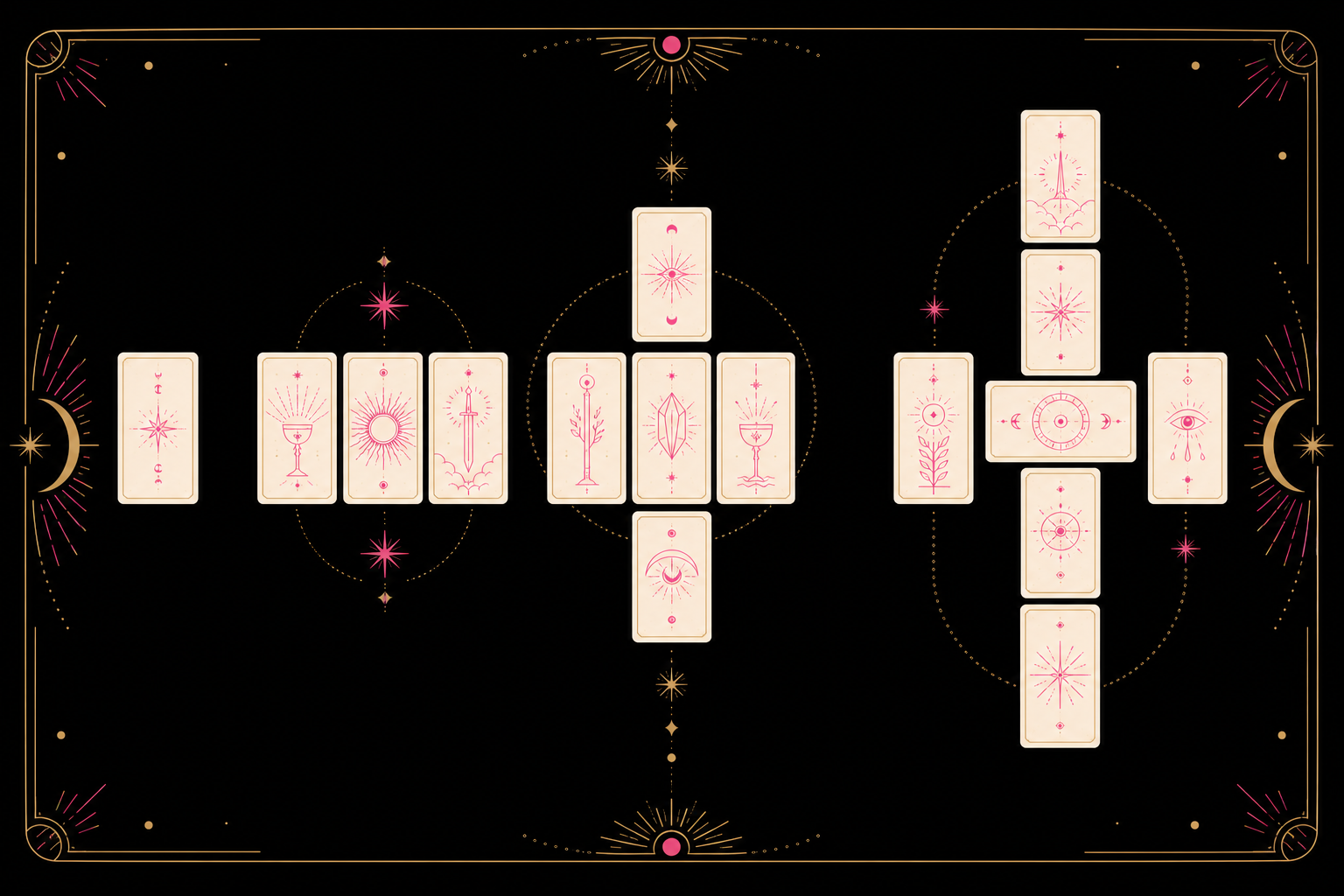
    Tarot spreads do not need to be complicated to be powerful. A spread is simply a layout that gives each card a job. It creates enough structure to keep your reading focused while still leaving room for intuition.

    The best layout is not necessarily the biggest one. It is the one that matches the question you are actually asking.

    One-card readings

    A single card is perfect when you want clarity without overwhelm. Ask what energy surrounds the situation, what you need to understand, or where your attention would be most useful today.

    One card is not a lesser reading. Learning to stay with one image and explore it properly can be far more revealing than pulling half the deck because you disliked the first answer.

    Three-card spreads

    The three-card spread is the most versatile tarot layout. Past, present and future is the familiar version, but the positions can represent almost anything: situation, obstacle and advice; mind, body and spirit; you, them and the connection; option A, option B and what matters most.

    Three cards create a beginning, middle and end, making it easier to see how the cards speak to one another. Read our full guide to three-card tarot spreads for layouts you can use straight away.

    Five-card spreads

    Five cards allow more detail without becoming unwieldy. Try: the heart of the matter, what supports you, what challenges you, what you cannot yet see and your most empowered next step.

    This layout works especially well when a situation has several moving parts and a three-card spread feels too compressed.

    The Celtic Cross

    The Celtic Cross is a classic ten-card spread covering the current situation, challenges, foundations, recent influences, possibilities, near future, your position, your environment, hopes or fears and a likely direction.

    It can be brilliant for a broad life overview, but it is not automatically the right choice for every question. If you want one clear decision, ten cards may create more noise than insight.

    Relationship and career layouts

    Topic-specific spreads help you ask sharper questions. A relationship spread might explore your needs, their energy, the dynamic between you, what requires honesty and the healthiest way forward. A career spread could cover your strengths, present obstacle, unseen opportunity, practical action and longer-term direction.

    Tarot should support your agency. It does not make another person’s decisions for them, guarantee an outcome or replace practical action.

    How to choose your spread

    Start with the question, then choose the fewest cards needed to explore it properly. If the question is precise, use one or three cards. If it involves several influences, try five. Use a larger layout when you genuinely want a wide-angle view.

    Before drawing, write down what every position means. This prevents you from changing the rules halfway through because an uncomfortable card appeared.

    Explore the tarot meanings library when a card needs closer attention, or visit Tarot Readings to try an interactive reading.